


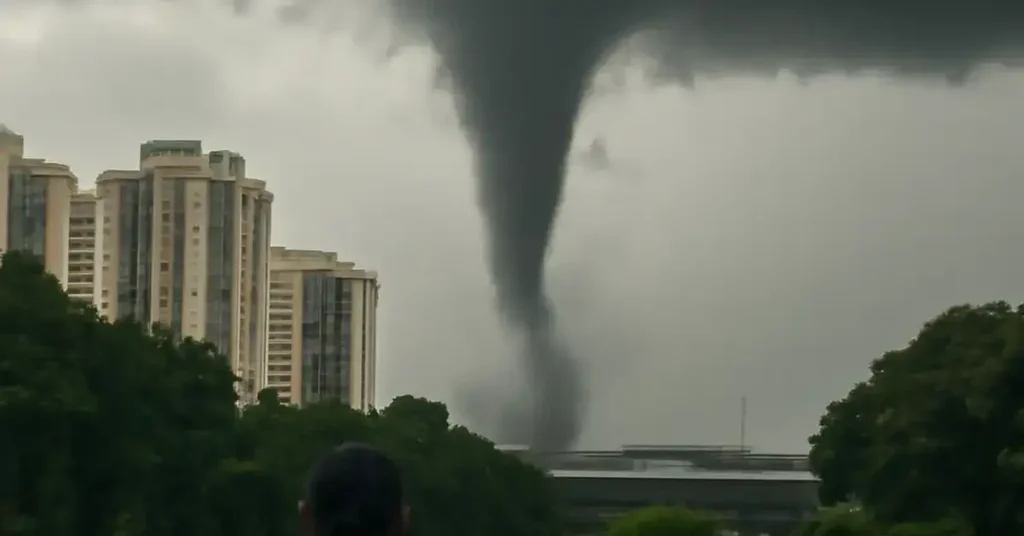
Wild Tornado Singapore Key Takeaways
A wild tornado Singapore is an extremely rare but real weather event, typically spawned by intense Sumatra squalls.
- A wild tornado Singapore usually forms during severe thunderstorms between November and January.
- Most tornadoes here are rated F0 or F1 on the Fujita scale, but flying debris and fallen trees remain dangerous.
- Knowing the warning signs, taking shelter immediately, and having a basic emergency kit are your best defenses.
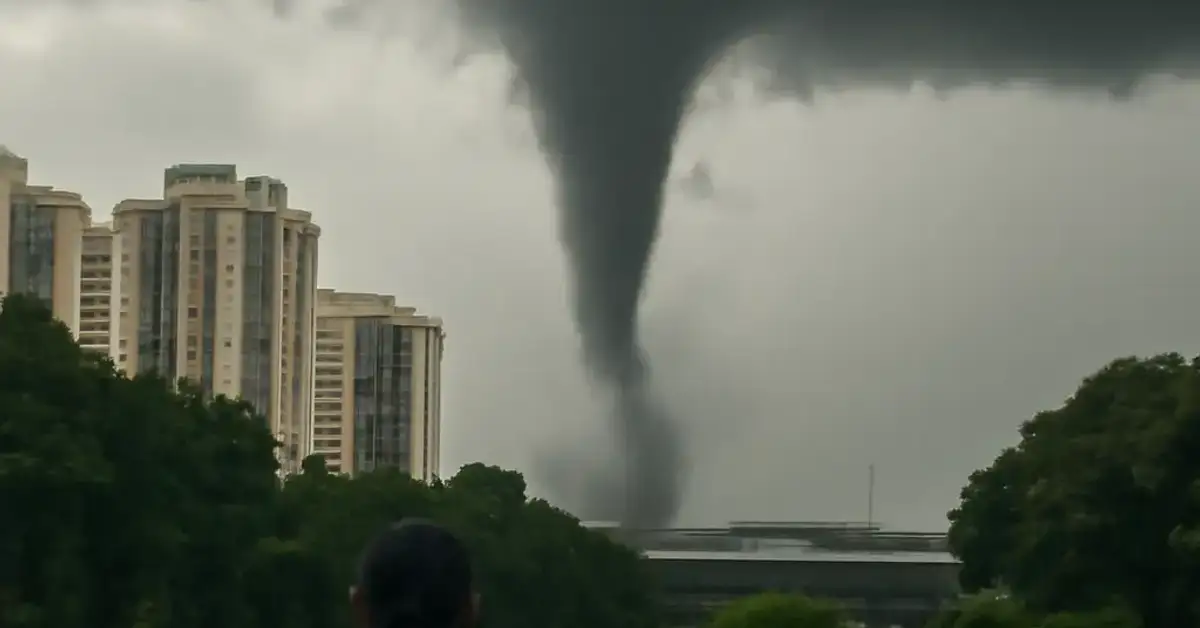
When the Sky Turns Violent: Understanding a Wild Tornado Singapore
The afternoon heat was stifling, the kind that presses down on the city until the air itself feels heavy. Then, without warning, the horizon turned an ominous greenish-black. The wind picked up with a sudden, violent shriek. In the western parts of Singapore, near Tuas and Jurong, residents watched in disbelief as a dark funnel cloud descended from the roiling sky. For a few terrifying minutes, a wild tornado Singapore swept across the landscape, tearing roofing off warehouses, uprooting trees, and sending debris spinning hundreds of metres into the air. For a nation more accustomed to steady tropical rains and the occasional flash flood, this was a stark reminder that nature can still surprise us. For a related guide, see Lucky Creek Singapore: 5 Costly Mistakes Every Player Should Avoid.
While such scenes are uncommon in Singapore, they are not unheard of. Between 2000 and 2025, the Meteorological Service Singapore (MSS) has recorded at least a dozen confirmed tornadoes. Most occur during the northeast monsoon season, when strong Sumatra squalls—fast-moving lines of thunderstorms—roll in from the west. These storms create the perfect conditions for rotating updrafts, and when the wind shear is just right, a tornado Singapore can form. The good news? The vast majority are weak, short-lived, and stay over open water or industrial areas. But as climate patterns shift, the possibility of a stronger or more urban-impacting event grows.
How a Rare Tornado Singapore Develops and What It Looks Like
To understand the risk, it helps to know how these whirlwinds are born. A rare tornado Singapore typically follows a specific recipe: a very unstable atmosphere, strong low-level wind shear, and a trigger like a Sumatra squall or a severe thunderstorm. When a squall line moves across the Straits of Malacca, the clash between cool, gusty outflow winds and warm, humid surface air can create a horizontal spinning effect near the ground. If that spinning column gets tilted vertically by the storm’s updraft, it becomes a tornado. For a related guide, see Cobra Casino Singapore: 5 Smart Safety Tips New Players Must Know.
Unlike the massive, mile-wide twisters of the American Midwest, Singapore’s tornadoes are usually narrow—often less than 100 metres wide—and last only 5 to 15 minutes. Their path of damage is typically short, a few hundred metres to a couple of kilometres. But within that path, winds can reach 120 km/h or more, enough to flip vehicles, snap tree trunks, and rip roof sheeting from buildings. The visual signature is unmistakable: a dark, rotating wall of cloud extending from the thunderstorm base, often with a dust cloud or debris ring at ground level.
How to Spot the Signs Before It Strikes
You don’t need a weather radar to know when conditions are ripe. Look for these clues:
- A sudden, eerie stillness after intense heat.
- A dark, greenish sky and low-hanging, rotating clouds.
- A loud roar that sounds like a freight train or jet engine.
- Large hail or a sudden change from rain to intense, horizontal wind.
If you see or hear any of these, do not wait for an official warning. Every second counts. Move to the strongest part of your building immediately.
5 Essential Safety Tips for Surviving a Wild Tornado Singapore
Preparation is your best weapon. Here is a practical, step-by-step guide to staying safe before, during, and after a wild tornado Singapore.
1. Know Your Shelter Zones
The safest place during a tornado is an interior room on the lowest floor, away from windows. In a typical HDB flat, that could be a bathroom, storeroom, or even a corridor. In a landed property, head for the basement or a central hallway. Avoid rooms with large windows, skylights, or sliding glass doors. Practise with your family so everyone knows where to go without thinking.
2. Build a Simple Emergency Kit
Tornadoes can knock out power and make roads impassable for hours. Keep a small kit ready: a torch with spare batteries, a power bank, a first-aid pack, a whistle, and bottled water. Store it in your designated shelter zone. You do not need a full bug-out bag—just enough to stay safe until help arrives.
3. Stay Weather-Aware During Monsoon Season
Between November and January, pay extra attention to weather forecasts, especially when the MSS issues a heavy rain or thunderstorm warning. Enable notifications from the myENV app or follow @MeteorServiceSG on social media. If you hear a severe thunderstorm alert and you are in a western or northern area of Singapore, stay indoors and keep an eye on the sky.
4. What to Do During the Tornado
If a tornado is imminent, do not try to outrun it in a car. Get out, find a sturdy building, and go to your shelter zone. Crouch low to the ground, cover your head with your hands, and protect the back of your neck. If you are caught outside with no shelter, lie flat in a ditch or low area and cover your head. Never take cover under a flyover or bridge—those amplify wind speeds and can collapse.
5. After the Storm Passes
Do not emerge immediately after the wind dies down. The best time is a few minutes after the roar stops. Watch for downed power lines, broken glass, and loose debris. Check your home for structural damage—especially the roof and load-bearing walls—and call 995 for emergency assistance if needed. Document the damage with photos for insurance purposes. Avoid using lifts in case of unstable electrical systems.
Common Mistakes to Avoid During a Tornado Singapore
One of the biggest mistakes people make is opening windows. Some old myths suggested that opening windows equalises pressure and prevents the roof from blowing off. This is false. Opening windows actually weakens the building’s structure and lets dangerous debris fly inside. Another common error is sheltering in a room with windows or an outside wall. Always go to the innermost part of your home, not near glass. A third mistake is ignoring the warning signs because tornadoes are “rare in Singapore.” Rarity does not mean zero risk, and complacency can be fatal.
Useful Resources
For official, up-to-date weather warnings and safety guides, check these trusted sources:
- Meteorological Service Singapore (MSS) — Monitor the latest weather bulletins, satellite imagery, and thunderstorm advisories directly from the national authority.
- Singapore Civil Defence Force (SCDF) — Weather Emergencies — Official emergency preparedness guides, including specific instructions for tornado situations and how to get help.
As Singapore continues to develop and our climate evolves, the chance of a wild tornado Singapore affecting a populated area may increase. But by staying informed, having a plan, and reacting quickly, we can reduce the danger. The next time the sky turns that strange greenish-black, you will know exactly what to do.
Frequently Asked Questions About Wild Tornado Singapore
How common is a wild tornado Singapore ?
Very rare. Singapore experiences an average of one to three tornadoes per year, mostly weak and short-lived. They are not nearly as frequent or intense as those in the United States or Southeast Asia’s typhoon belts.
What causes a wild tornado Singapore ?
They are typically triggered by severe Sumatra squalls or intense thunderstorms during the northeast monsoon season (November to January). Strong wind shear and unstable air cause rotating updrafts that can touch down as a tornado.
Has Singapore ever had a strong tornado?
The strongest recorded in Singapore was an F1 tornado that hit the Pasir Ris area in 2024, causing substantial roof damage and uprooting trees. Most remain at F0 intensity (weakest on the Fujita scale).
Where do tornadoes usually occur in Singapore?
Western and northern areas like Tuas, Jurong, Lim Chu Kang, and Choa Chu Kang have seen most recorded events. This matches the path of incoming Sumatra squalls from the west.
Can a tornado form over the sea near Singapore?
Yes. Waterspouts—tornadoes over water—are relatively common in the Singapore Strait. Most dissipate before reaching land, but some can move ashore and become a land tornado.
What time of year is the risk highest for a wild tornado Singapore ?
Risk peaks during the northeast monsoon season, especially from late November to early January. Afternoon thunderstorms with squall lines are most likely to produce tornadoes between 2 PM and 6 PM.
How long does a tornado in Singapore last?
Duration is typically very short—between 5 and 15 minutes. The entire lifecycle, from formation to dissipation, usually happens in under half an hour.
What is the Fujita scale rating for most Singapore tornadoes?
Nearly all are F0 (65–115 km/h winds) or occasionally F1 (116–180 km/h). This is enough to cause damage like broken branches and loose roof tiles, but rarely structural collapse.
Should I be worried about a wild tornado Singapore in the city centre?
Risk in the city core is very low because the urban heat island effect and high buildings can disrupt tornado formation. However, a squall-line tornado could still affect fringe areas like Bukit Batok or Punggol.
How does a Singapore tornado differ from a US tornado?
US tornadoes often last hours, span kilometres, and reach EF5 intensity (over 300 km/h). Singapore tornadoes are smaller, weaker, and much rarer. The warning systems and building codes here also differ significantly.
Can a tornado hit an HDB block?
An F0 or F1 tornado can damage the roof, break windows, and dent external walls but is unlikely to collapse a reinforced concrete HDB block. Still, flying debris and shattered glass pose real danger to occupants.
What should I do if I see a funnel cloud near my home?
Do not wait to confirm it is a tornado. Go immediately to your pre-designated shelter zone—an interior room on the lowest floor without windows. Cover your head and neck with your arms.
Does the Singapore Government issue tornado warnings?
The Meteorological Service Singapore issues general severe thunderstorm warnings, not specific tornado alerts. They rely on radar detection of rotation. When a strong squall hits, assume the worst and take shelter.
Is it safe to shelter in a car during a tornado?
No. Cars can be tossed or crushed by debris. If you are in a vehicle, abandon it and seek a sturdy building or a low-lying ditch. Never park under a bridge—wind channels and debris can make it a death trap.
What should be in a Singapore tornado emergency kit?
Keep a torch, portable power bank, first-aid pack, whistle, bottled water, and a list of emergency contacts. Store it in your shelter zone. A multi-tool and a plastic poncho are helpful additions.
Does Singapore have tornado drills or public education?
No formal tornado drills exist, but the SCDF’s annual Emergency Preparedness Day covers thunderstorm dangers. Schools and workplaces should adapt their existing shelter-in-place plans to include tornado scenarios.
Can a tornado happen during the night in Singapore?
Yes. Sumatra squalls can arrive at any hour, including nighttime. If you are woken by a loud roar, strong wind, or hail, treat it as a potential tornado and take cover immediately.
What kind of damage can I expect from a weak tornado?
Expect fallen tree branches, displaced roof tiles, broken windows, flattened potted plants, and scattered debris. Vehicles may have dents and scratches. Structural damage is usually limited to lightweight structures like sheds or playground shelters.
How do I know if my home is safe after a tornado passes?
Check for sagging ceilings, cracks in walls, leaking gas, or exposed electrical wires. Look for broken water pipes. If you smell gas or see sparks, leave immediately and call 995. Do not enter a room where the ceiling looks unstable.
Where can I get real-time updates during a severe thunderstorm in Singapore?
Use the myENV app for official MSS warnings. Also follow the National Environment Agency (NEA) website and social media channels. Local news outlets like Channel NewsAsia often broadcast live updates during severe weather.

Millie Charlton is a Berlin-based iGaming specialist and founder of spinbonussg.com . She provides expert online casino reviews, promotional guides, and responsible gambling advice for Southeast Asian players. Dedicated to transparency and player protection, Millie ensures her content is trustworthy, insightful, and easy to navigate for both casual and experienced online gaming audiences.